

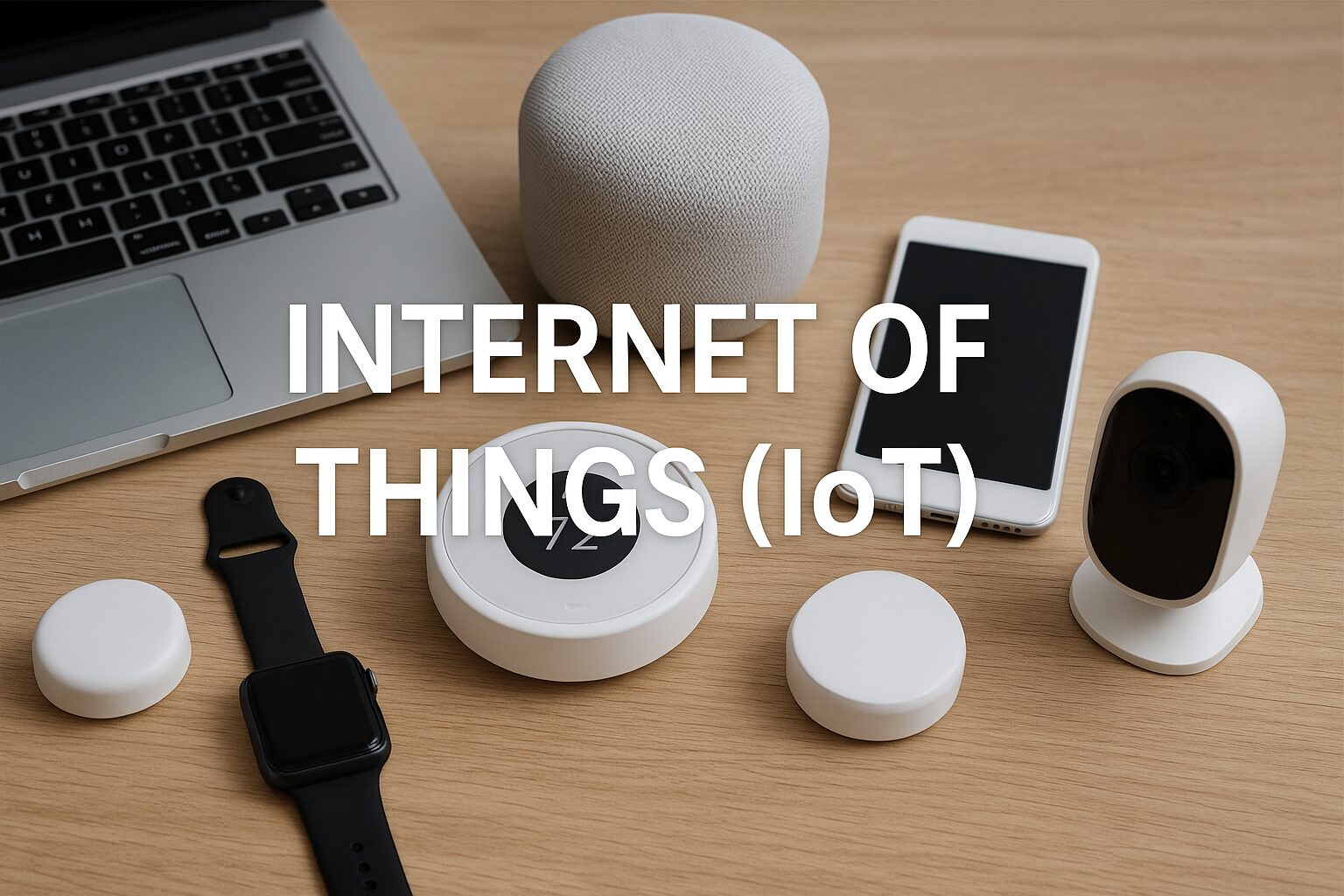
The Internet of Things (IoT) is one of the most important technologies shaping our everyday lives today. In simple words, IoT refers to physical devices that connect to the internet and share information automatically. These devices include smart lights, watches, appliances, cars, and even entire buildings. IoT matters more than ever in 2025 because almost everything around us is becoming smart. Homes can adjust their own temperature, doctors can monitor patients from afar, and cars can check their own health. All these improvements make life easier, faster, and more efficient.
IoT works by helping devices “talk” to each other without human action. For example, your smartwatch tracks your steps → sends data to your phone → your phone gives you health advice. This automatic exchange of data is what makes IoT powerful.
This guide will explain:
- What IoT means
- How IoT works in simple terms
- Types of IoT
- Real-world uses and examples
- Benefits and challenges
- What the future of IoT looks like
By the end, you’ll understand how IoT affects your home, workplace, health, and even your city.
What Is IoT?
The Internet of Things (IoT) simply means connecting everyday devices to the internet so they can collect, send, and receive data. These devices collect, exchange, and analyze data to make processes smarter, more efficient, and often automated. IoT enables everyday objects to communicate with each other and with users, allowing for features such as remote control, real-time monitoring, predictive maintenance, and improved decision-making across industries like healthcare, transportation, agriculture, and smart homes.
How IoT Evolved
The idea started with basic connected machines in the early 2000s. Today, IoT includes millions of smart devices that use:
- Wi-Fi
- Bluetooth
- 4G/5G
- Low-power networks (LPWAN)
Basic Components of IoT
- Sensors – to detect and measure things (motion, humidity, etc.)
- Connectivity – to move data from device to the cloud
- Data Processing – the cloud interprets information
- User Interface – apps and dashboards show results
Related Terms
- Smart Home – IoT devices inside your home
- Smart Devices – appliances and gadgets connected online
- M2M (Machine-to-Machine) – devices communicating directly with each other
How IoT Works
The Internet of Things (IoT) works by connecting physical devices to the internet, allowing them to collect, exchange, and process data. Sensors in devices—such as smart home appliances, wearables, or industrial machines—gather information from their environment. This data is transmitted through networks like Wi-Fi, Bluetooth, or 5G to cloud servers, where software analyzes it, often using AI or machine learning. Users can then access insights, control devices, or receive automated alerts through apps and dashboards, making processes smarter, faster, and more efficient.
Main Components of IoT Systems
1. Sensors
These detect light, heat, movement, moisture, and more.
Semantic keywords: iot sensors, connected sensors
2. Connectivity Technologies
- Wi-Fi – for home devices
- Bluetooth – for wearables
- Cellular networks (4G/5G) – for cars, GPS trackers
- LPWAN (Low Power Wide Area Network) – for smart agriculture or city systems
3. Cloud Computing
Data is processed in remote servers that analyze patterns and send results.
4. User Apps
These show notifications, charts, real-time updates, and allow you to control devices.
Automation + AI
AI helps IoT devices predict what you need. For example:
- A smart thermostat learns your schedule
- A smart fridge tracks expiration dates
- A car uses AI sensors to detect maintenance needs
Types of IoT
1. Consumer IoT
Smart home gadgets, wearables, appliances.
2. Industrial IoT (IIoT)
Used in factories for automation and predictive maintenance.
3. Enterprise IoT
Businesses use IoT for inventory tracking, office automation, and security.
4. Healthcare IoT
Devices monitor patients, track vital signs, and support hospital systems.
5. Smart City IoT
Public sectors use IoT for traffic systems, energy management, and safety.
6. Transportation IoT
Connected cars, fleets, and GPS systems.
Real-World Applications of IoT
Smart Home Devices
Examples:
- Smart bulbs
- Smart plugs
- Smart speakers
- Smart thermostats
- Wi-Fi security cameras
These help save energy, boost security, and make your home feel more modern.
Wearable Technology
- Smartwatches
- Fitness trackers
- Smart rings
These track your steps, heart rate, sleep quality, and more.
Smart Appliances
- IoT refrigerators that alert you when items run out
- Robotic vacuums that clean automatically
- Smart washing machines that detect load size
Healthcare IoT
- Remote patient monitoring devices
- Smart beds in hospitals
- Connected inhalers
- Glucose monitors
These help doctors watch patients in real time.
Industrial IoT (IIoT)
Factories use sensors to:
- Detect machine issues early
- Prevent accidents
- Reduce downtime
Smart City Solutions
Cities use IoT to:
- Control traffic lights
- Manage waste collection
- Reduce streetlight electricity use
Transportation and Automotive IoT
- Connected cars send data about engine health
- GPS trackers monitor vehicle location
- Fleet systems track delivery trucks
Agriculture IoT
- Soil moisture sensors
- Weather alert systems
- Automated irrigation
This helps farmers save water and grow crops more efficiently.
Benefits of IoT
1. Convenience and Automation
Devices can work automatically without you doing anything.
2. Better Decision-Making
IoT provides data that helps users and businesses make smarter choices.
3. Cost Savings
Smart devices help reduce energy bills and maintenance costs.
4. Real-Time Monitoring
You can check your home, health, or business from anywhere.
5. Energy Efficiency
Smart lighting and appliances use only what you need.
Challenges and Risks of IoT
While IoT offers incredible benefits, it also comes with significant challenges and risks. Security vulnerabilities make connected devices targets for cyberattacks, while privacy concerns arise from the vast amounts of personal data they collect. Interoperability issues between devices from different manufacturers can limit efficiency, and high implementation costs can be a barrier for businesses. Additionally, the massive volume of data generated can overwhelm systems without proper management, and reliance on network connectivity makes IoT prone to downtime. Finally, navigating regulatory and compliance requirements adds complexity, making careful planning, security measures, and data governance essential for safe and effective IoT deployment.
The Future of IoT
The future of IoT looks incredibly promising as technology continues to advance and more devices become connected. In the coming years, IoT is expected to play a central role in smart homes, cities, industries, and healthcare. Devices will become more intelligent, leveraging artificial intelligence (AI) and machine learning to make real-time decisions, optimize processes, and predict maintenance needs before problems occur.
We can also expect greater interoperability as industry standards mature, allowing devices from different manufacturers to communicate seamlessly. 5G networks will further enhance IoT by enabling faster, more reliable connectivity and supporting massive numbers of connected devices.
Moreover, IoT will continue to drive automation, efficiency, and innovation across sectors, from energy management and transportation to personalized healthcare and supply chain optimization. However, the growth of IoT will also require robust security, privacy safeguards, and regulatory frameworks to protect users and data.
Visual: IoT Growth Forecast (Illustration)
Global IoT Devices (Billions)
Year     | Devices
2022     | 12.3
2023     | 15.1
2024     | 18.0
2025     | 21.5
2027     | 30.0+
This simple graph shows how quickly IoT adoption is growing.
Conclusion
The Internet of Things (IoT) is transforming our homes, industries, and cities. It improves our daily lives through automation, smart data, and connected devices that make tasks easier and more efficient. As IoT continues to expand, we must also stay aware of the risks such as cybersecurity and privacy protection. If you want to upgrade your digital lifestyle, now is the perfect time to explore smart devices and IoT solutions.
FAQs About IoT
1. What does IoT mean in simple words?
IoT means connecting everyday devices to the internet so they can share data and work automatically.
2. How does IoT work?
IoT devices use sensors to collect information, send it online, and let you control or monitor them through apps.
3. What are the most common IoT devices?
Smart lights, smart speakers, smartwatches, security cameras, and smart plugs.
4. Why is IoT important today?
It makes life easier, boosts productivity, improves safety, and supports smarter decisions.
5. Is IoT safe to use?
Yes, but you need to secure your devices with strong passwords and regular updates.
6. What are examples of IoT in daily life?
Robot vacuums, smart TVs, fitness trackers, and smart doorbells.
7. How does IoT relate to smart homes?
IoT drives smart home technology by connecting home devices to your network.
8. What industries use IoT the most?
Healthcare, manufacturing, transportation, agriculture, and retail.
9. What skills are needed for IoT careers?
Basic electronics, networking, programming, cloud computing, and data analysis.
10. How will IoT change the future?
IoT will create smarter homes, smarter cities, and more automated systems.
Disclaimer
This article is for educational purposes only. IoT technologies, devices, and services may differ depending on brand, region, or industry. Always check the manufacturer’s guidelines and follow proper cybersecurity practices.