
The world is now more connected than ever. From remote work and online classes to smart homes and high-quality streaming, people rely heavily on fast and stable internet. As our digital needs grow each year, many traditional internet options struggle to keep up. This is where fiber optic cable technology steps in.
Fiber internet is widely known for being faster, stronger, and more reliable than old copper-based connections. Instead of using metal wires, fiber optic cables use pulses of light to send data at incredible speeds. This makes them perfect for the modern world where speed, stability, and efficiency matter more than ever.
Because of these benefits, more households and businesses are switching to fiber internet. It offers a future-proof connection that keeps up with growing demand, whether you’re running multiple devices or supporting cloud-based systems.
What Is a Fiber Optic Cable?
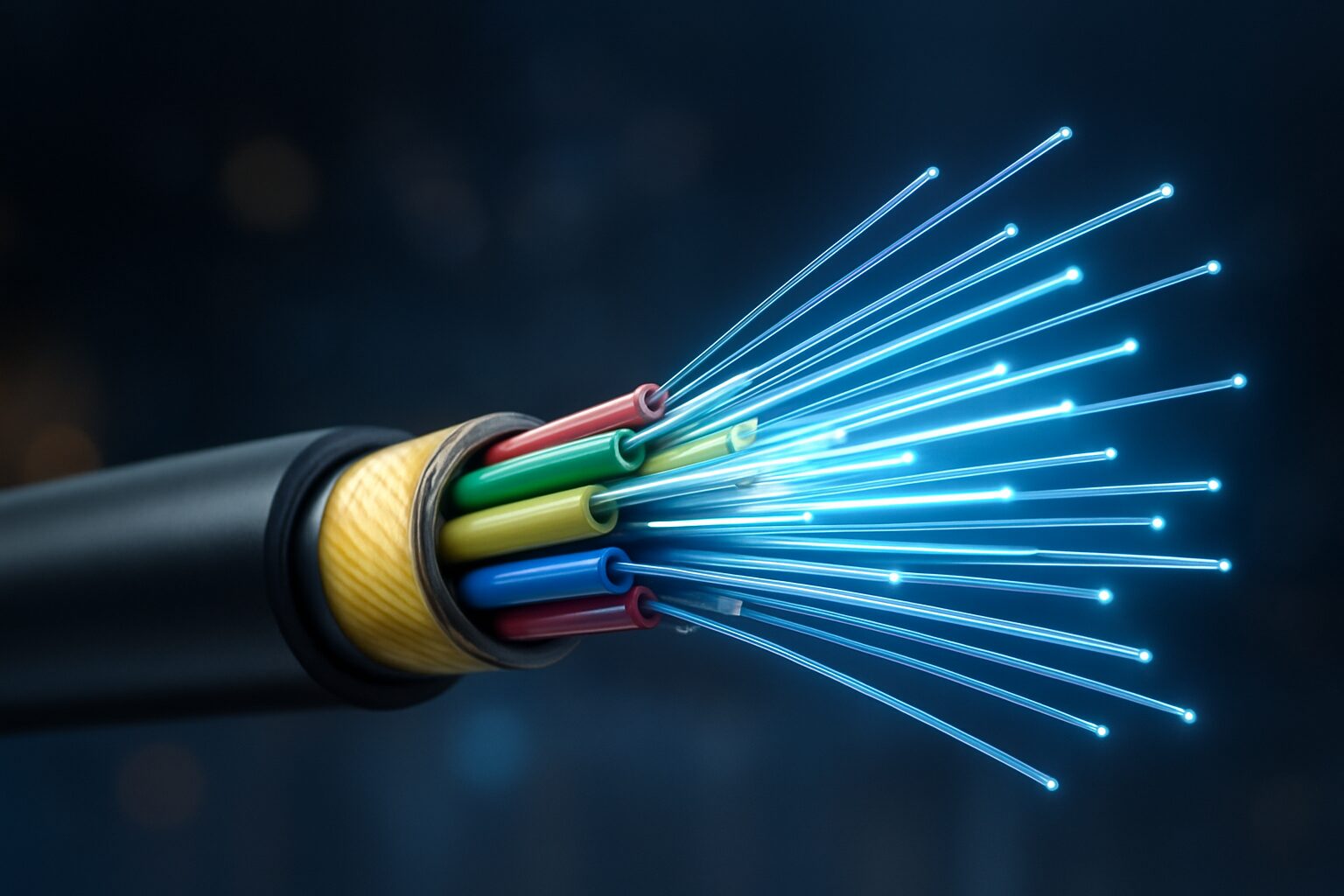
A fiber optic cable is a thin, flexible cable made up of hair-like strands of glass or plastic fibers. These fibers carry data using beams of light rather than electrical signals. This is what makes fiber internet incredibly fast, stable, and energy-efficient. It is made of thin strands of glass or plastic fibers surrounded by protective layers to prevent damage. Fiber optic cables are known for their high-speed, long-distance, and high-bandwidth capabilities, making them ideal for internet connections, telecommunications, cable TV, and data networks. Unlike traditional copper cables, fiber optics are less prone to interference and signal loss, ensuring reliable and fast data transmission over long distances.
How Fiber Optic Cables Work
Data travels through the fiber strands as light signals. Since light moves extremely fast and doesn’t face electrical interference, information can move long distances without losing strength or quality. Each fiber has a core where the light travels, surrounded by a cladding layer that reflects the light back into the core, keeping the signal strong and reducing loss. An outer protective jacket shields the cable from physical damage, moisture, and environmental factors.
Data is sent using lasers or LEDs at one end of the cable, and a photodetector at the other end converts the light back into electrical signals that devices can understand. This process allows fiber optic cables to provide high bandwidth, low latency, and minimal interference, making them ideal for internet, telecommunications, and high-speed networking.
What Is Fiber Optics Made Of?
Fiber optics are primarily made of ultra-pure glass (silica) or high-quality plastic that forms the core of the optical fiber. This core is the part that carries the light signals. Surrounding the core is a layer called the cladding, which reflects the light back into the core to prevent signal loss. Outside the cladding is a protective coating or jacket that shields the fiber from physical damage, moisture, and environmental stress.
Some high-performance fiber optic cables may also include strengthening materials, such as Kevlar or metal sheaths, to improve durability, especially in outdoor or industrial applications. The combination of core, cladding, and protective layers ensures that fiber optics can transmit data reliably over long distances at high speeds.
Key Components of Fiber Optic Cables
- Core – The center part of the fiber where light travels.
- Cladding – A surrounding layer that reflects light back into the core to keep the signal strong.
- Buffer Coating – A protective outer layer that keeps the fiber safe from damage and moisture.
Fiber Optic Cable vs. Copper Cables (DSL/Coaxial)
| Feature | Fiber Optic Cable | Copper Cable (DSL/Coaxial) |
|---|---|---|
| Speed | Ultra-fast, symmetrical | Slower, unequal upload/download |
| Stability | Very stable | Prone to interference |
| Distance | Long-distance, no loss | Speed drops over distance |
| Latency | Very low | Higher |
| Security | Hard to tap | Easier to hack |
What Is Fiber Optics Used For?
Fiber optics are used to transmit data as pulses of light through thin strands of glass or plastic, allowing for high-speed, high-bandwidth communication. Common uses include:
- Internet and Broadband – Providing ultra-fast home and business internet connections.
- Telecommunications – Long-distance phone and video communications with minimal signal loss.
- Cable TV – Delivering high-definition TV signals with consistent quality.
- Medical Equipment – Endoscopes and imaging devices rely on fiber optics for precision and clarity.
- Networking and Data Centers – Connecting servers and switches for fast, reliable data transfer.
- Industrial and Military Applications – Used in sensors, controls, and secure communications.
Fiber optics are essential wherever fast, reliable, and long-distance data transmission is required.
Why Fiber Optic Internet Is Transforming Connectivity
Internet use is rising rapidly due to cloud services, 4K/8K video streaming, online gaming, remote collaboration tools, and smart home devices. Copper-based connections are no longer enough for heavy digital lifestyles.
Growing Global Demand
Many countries are now upgrading their infrastructure to support fiber networks. Faster and more reliable internet boosts everything—from education and e-commerce to entertainment and business operations.
Industries and Households Benefiting the Most
- Remote workers and freelancers
- Large families with multiple devices
- Gamers and content creators
- Corporations and tech companies
- Data centers and cloud service providers
- Smart homes with connected appliances
Fiber is quickly becoming the preferred connection because it supports both everyday tasks and high-performance needs without lag or interruptions.
Top Advantages of Fiber Optic Internet Connections
Below are the biggest reasons why fiber optic cable technology stands out.
Lightning-Fast Speeds
Fiber internet is known for its unmatched speed. Many providers offer 1 Gbps or even 10 Gbps connections.
Symmetrical Upload and Download Speeds
Unlike cable or DSL, fiber gives you equal upload and download speeds. This is important for:
- Video conferencing
- Uploading large files
- Live streaming
- Cloud backups
Perfect for Modern Digital Tasks
Activities such as online gaming, HD/4K streaming, and remote work perform smoothly without buffering.
Speed Comparison
Fiber Internet:
✔ 1,000 Mbps and beyond
✔ Consistent even during peak hours
Copper Internet (DSL/Cable):
✘ Often capped at lower speeds
✘ Slows down when many users are online
Higher Bandwidth Capacity
Fiber optic cables can carry much more data compared to copper cables.
Supports Multiple Devices
A single fiber connection can handle:
- Smartphones
- Smart TVs
- Laptops
- Tablets
- Gaming consoles
- Home automation devices
This makes it ideal for households with many users or businesses with large networks.
Future-Proof Internet
Bandwidth demand increases every year. Fiber ensures your connection stays fast long-term without needing major upgrades.
Superior Reliability
Fiber is more reliable than copper because it isn’t affected by electrical interference, extreme weather, or long distance.
Key Reliability Benefits
- Consistent speeds all day
- Lower risk of outages
- Less signal loss
- Stronger performance during peak usage
Even during storms, fiber maintains better stability compared to traditional connections.
Enhanced Security
Security is one of the strongest advantages of fiber.
Hard to Hack
Fiber signals are transmitted through light, making them extremely hard to tap without being detected.
Why Businesses Prefer Fiber
- Better protection for sensitive data
- Lower risk of cyber attacks
- Ideal for financial, medical, and government sectors
Copper lines can be intercepted easily, but fiber makes unauthorized access much more difficult.
Low Latency Performance
Latency is the delay between sending and receiving data. Fiber has the lowest latency among all connection types.
Why Latency Matters
- Online gaming
- Live streaming
- VoIP calls
- Stock trading
- Remote medical services
Fiber ensures smoother, real-time communication and faster response times.
Long Lifespan & Durability
Fiber optic cables last longer and require less maintenance.
Environmental Resistance
- Not affected by moisture
- Not affected by electrical interference
- More resistant to temperature changes
Copper cables degrade over time, while fiber can last decades.
Lower Operational Costs
Because fiber is strong and durable, it requires fewer repairs—saving money for both providers and users.
Energy Efficiency
Fiber optic cable networks use less energy than copper networks.
Eco-Friendly Benefits
- Reduced power consumption
- Improved long-term efficiency
- Ideal for companies with sustainability goals
This makes fiber not only fast and reliable but also environmentally friendly.
Common Use Cases of Fiber Internet
Remote Work & Video Conferencing
Fiber allows smooth Zoom, Teams, and Google Meet calls without lag.
4K/8K Streaming
High-resolution streaming becomes seamless even when multiple devices are online.
Smart Home Connectivity
Smart lights, security cameras, thermostats, and appliances work better with stable and fast internet.
Enterprise Networks & Data Centers
Businesses rely on fiber because it supports:
- Cloud computing
- Large data transfers
- Remote servers
- Secure communications
Fiber Optic Cable Installation Considerations
Installing fiber optic cables requires careful planning to ensure reliable, high-speed internet performance. Key considerations include the route of the cable, avoiding sharp bends or physical damage, and protecting it from moisture or extreme temperatures. Proper termination and splicing are essential for minimizing signal loss. Additionally, compatibility with existing network equipment and sufficient clearance for future upgrades should be taken into account. Hiring professional technicians or following manufacturer guidelines can help ensure a safe, efficient, and long-lasting fiber optic installation.
Fiber Internet vs. Other Connection Types
| Feature | Fiber Internet | DSL | Cable | Satellite |
|---|---|---|---|---|
| Speed | Up to 10 Gbps | Up to 100 Mbps | Up to 1 Gbps | Up to 100 Mbps |
| Latency | Very low | Medium | Medium | High |
| Reliability | Very high | Moderate | Moderate | Low (weather-dependent) |
| Distance Limit | Very long | Short (signal degrades over distance) | Moderate | Very long |
| Interference | Minimal | Moderate | Moderate | High (weather and obstacles) |
| Installation Cost | High | Low | Moderate | High |
| Best For | Streaming, gaming, large households, businesses | Light browsing | Streaming and moderate gaming | Rural areas without wired internet |
This table highlights why fiber optic internet is often the best choice for speed, reliability, and low latency.
Future of Fiber Optic Technology
The future of connectivity depends heavily on fiber networks.
Upcoming Advancements
- Faster multi-gigabit speeds
- Better global coverage
- Smarter routing systems
- Improved energy efficiency
Role in Smart Cities and IoT
Smart cities, autonomous vehicles, and IoT devices all need ultra-fast data transmission. Fiber will be the backbone of these innovations.
Conclusion
Fiber optic internet offers the best speed, stability, and performance for modern digital needs. With higher bandwidth, low latency, and excellent security, it provides a future-proof connection for homes and businesses alike. If you want a fast, reliable, and modern connection, switching to fiber optic cable technology is the smartest choice.
Frequently Asked Questions (FAQs)
1. Is fiber optic internet better than cable?
Yes. Fiber offers faster speed, better reliability, and lower latency than cable.
2. How fast is fiber optic internet?
It can reach 1–10 Gbps depending on the plan and provider.
3. Is fiber internet more expensive?
Not always. Many providers offer affordable plans similar to cable.
4. Can bad weather affect fiber internet?
Fiber is more weather-resistant compared to copper-based connections.
5. Is fiber safe from hacking?
Yes. Fiber is harder to tap or intercept, making it more secure.
6. Does fiber support gaming?
Absolutely. Fiber’s low latency and fast speeds are perfect for gaming.
7. How long does fiber last?
Fiber optic cables can last 25+ years with proper maintenance.
8. Can many devices connect to fiber at once?
Yes. Fiber has high bandwidth that supports multiple devices without slowing down.
9. Is fiber available everywhere?
Not yet, but coverage is expanding quickly worldwide.
10. Should businesses switch to fiber?
Yes. Fiber improves productivity, communication, and security.
Disclaimer
This article is for informational purposes only. Actual internet performance and availability may vary depending on your location, provider, and network setup. Always check local service options before making a decision.