

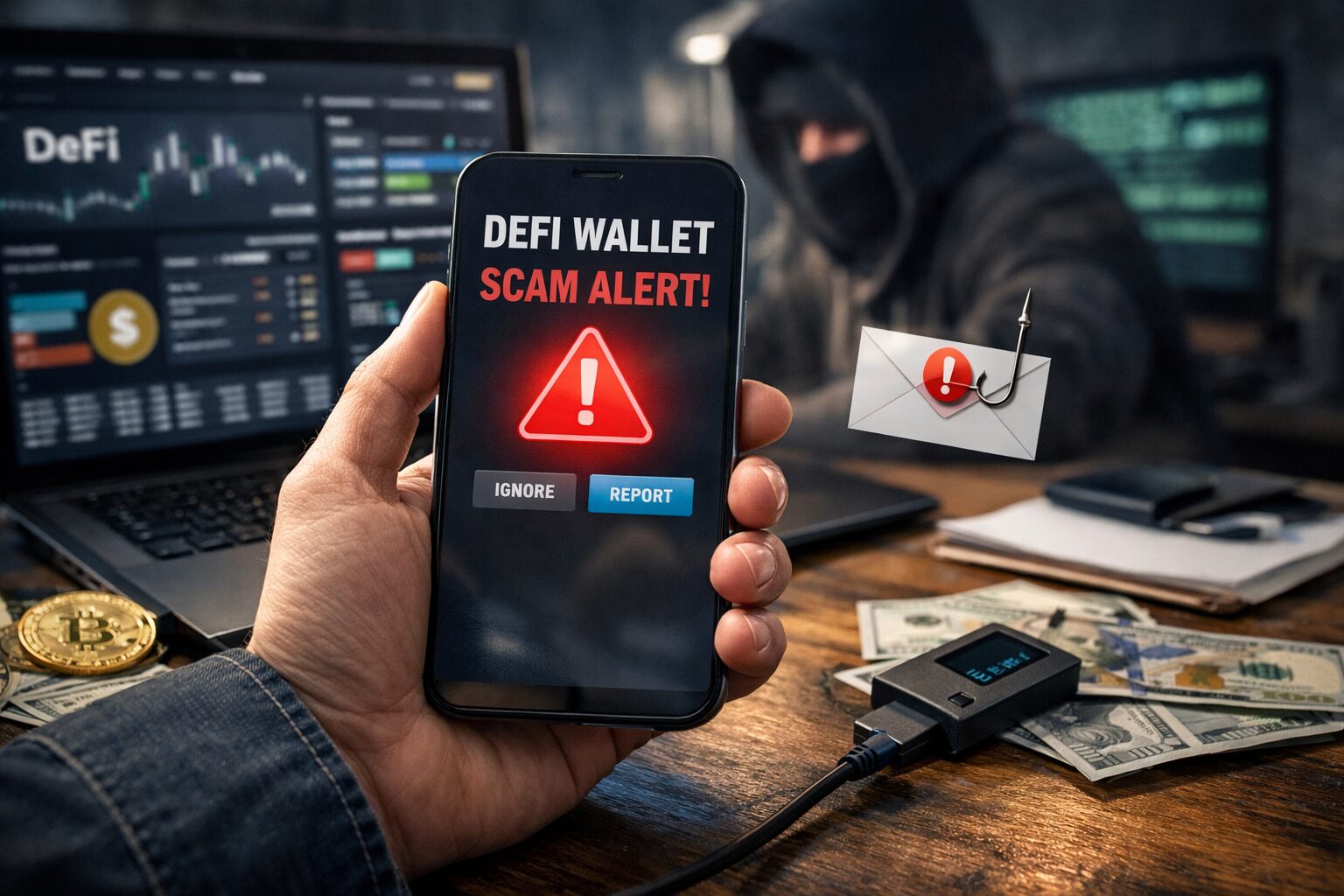
Decentralized Finance, or DeFi, has grown rapidly over the past few years, offering users the ability to trade, lend, and earn interest on crypto without relying on banks. With millions of users joining every month, wallet security has become more important than ever. While DeFi offers exciting opportunities, it also attracts scammers, making defi wallet scams a growing threat. Millions of dollars are lost to scams every year—don’t let it happen to you.
Ensuring your wallet is secure and knowing how to spot scams is essential for anyone using DeFi platforms. From beginners to experienced traders, everyone can be a target.
What Are DeFi Wallet Scams?
DeFi wallet scams are fraudulent activities that aim to steal your cryptocurrency. Common forms include:
- Phishing attacks: Fake emails, websites, or messages that trick users into giving private keys.
- Fake wallets: Malicious wallet apps that steal funds instead of securing them.
- Malicious smart contracts: Scam contracts that appear legitimate but drain funds when interacted with.
Recent examples:
- The Compound DeFi phishing attack in 2023 led to over $2 million stolen from users.
- Fake versions of popular wallets like MetaMask have appeared on app stores, tricking beginners into installing them.
Scammers target everyone. Beginners may fall for easy traps like fake airdrops, while experienced users may be tricked by sophisticated fake smart contracts.
Common Red Flags to Spot DeFi Wallet Scams
Knowing the warning signs can save your funds. Watch out for:
- Unsolicited links or emails: Never click on links asking for your wallet info.
- Guaranteed returns: If a DeFi project promises huge profits with no risk, it’s likely a scam.
- Fake social media accounts: Scammers impersonate official accounts to lure users.
- Unverified smart contracts or new token launches: If a contract isn’t verified or audited, proceed with extreme caution.
Best Practices to Prevent DeFi Wallet Scams
Protecting your crypto requires proactive measures:
- Use reputable wallets: Stick to well-known wallets like MetaMask, Trust Wallet, or Ledger.
- Enable 2FA and hardware wallets: Adds layers of security against unauthorized access.
- Verify URLs and contracts: Double-check website addresses and smart contract codes before interacting.
- Never share private keys or seed phrases: No legitimate platform will ask for them.
- Keep software updated: Updates often fix security vulnerabilities.
How to Recover (or Minimize Losses) After a Scam
If you suspect a scam:
- Report immediately: Notify the platform, DeFi community channels, or authorities.
- Track suspicious transactions: Tools like Etherscan can help monitor activity.
- Use recovery tools cautiously: Some services may help recover lost tokens, but verify credibility.
- Understand limitations: Cryptocurrency transactions are often irreversible, so prevention is always better than recovery.
Tools and Resources to Stay Safe
- Wallet security tools: Hardware wallets (Ledger, Trezor), MetaMask security features.
- Scam detection platforms: EtherscamDB, DeFi Safety.
- Educational resources: DeFi tutorials, community forums, YouTube security guides.
By leveraging these tools, you can significantly reduce the risk of falling victim to DeFi wallet scams.
Conclusion
DeFi offers incredible opportunities, but the threat of wallet scams is real. By staying vigilant, using trusted wallets, verifying links, and keeping your software updated, you can protect your assets. Being cautious today can save you thousands tomorrow. Always research, verify, and stay updated to enjoy DeFi safely.
FAQs
What is a DeFi wallet scam?
A scam designed to steal cryptocurrency from your wallet through phishing, fake apps, or malicious contracts.
How do scammers target users?
Through phishing emails, fake social media accounts, fraudulent apps, and unverified smart contracts.
Can I recover my crypto after a scam?
Recovery is difficult because transactions are usually irreversible, but reporting and using verified recovery tools may help.
Which wallets are safest for DeFi?
Trusted wallets include MetaMask, Trust Wallet, Ledger, and Trezor.
What is phishing in DeFi?
A scam where attackers trick users into sharing private keys or seed phrases via fake emails or websites.
Are new tokens safe to buy?
Only if the smart contract is verified and the project has credible information and community support.
What is 2FA and why is it important?
Two-factor authentication adds an extra layer of security by requiring a second form of verification.
How can I verify a smart contract?
Use platforms like Etherscan to check if the contract is audited and verified.
Can hardware wallets prevent all scams?
They protect against online attacks, but users must still avoid phishing and fake websites.
Where can I learn more about DeFi security?
Educational resources include DeFi Safety, EtherscamDB, crypto blogs, and verified YouTube tutorials.

Wallet security is definitely top of mind with so many people getting into DeFi; it’s good to see an article highlighting these scams. I found some additional insights on https://tinyfun.io/game/fruit-merge that reinforced the importance of double-checking everything.
Get ready for some festive fun with hexa stack christmas! This addictive puzzle game offers a delightful challenge with its unique stacking mechanics. Perfect for unwinding, it’s a great way to get into the holiday spirit. Highly recommended for puzzle lovers looking for a charming and engaging experience!