

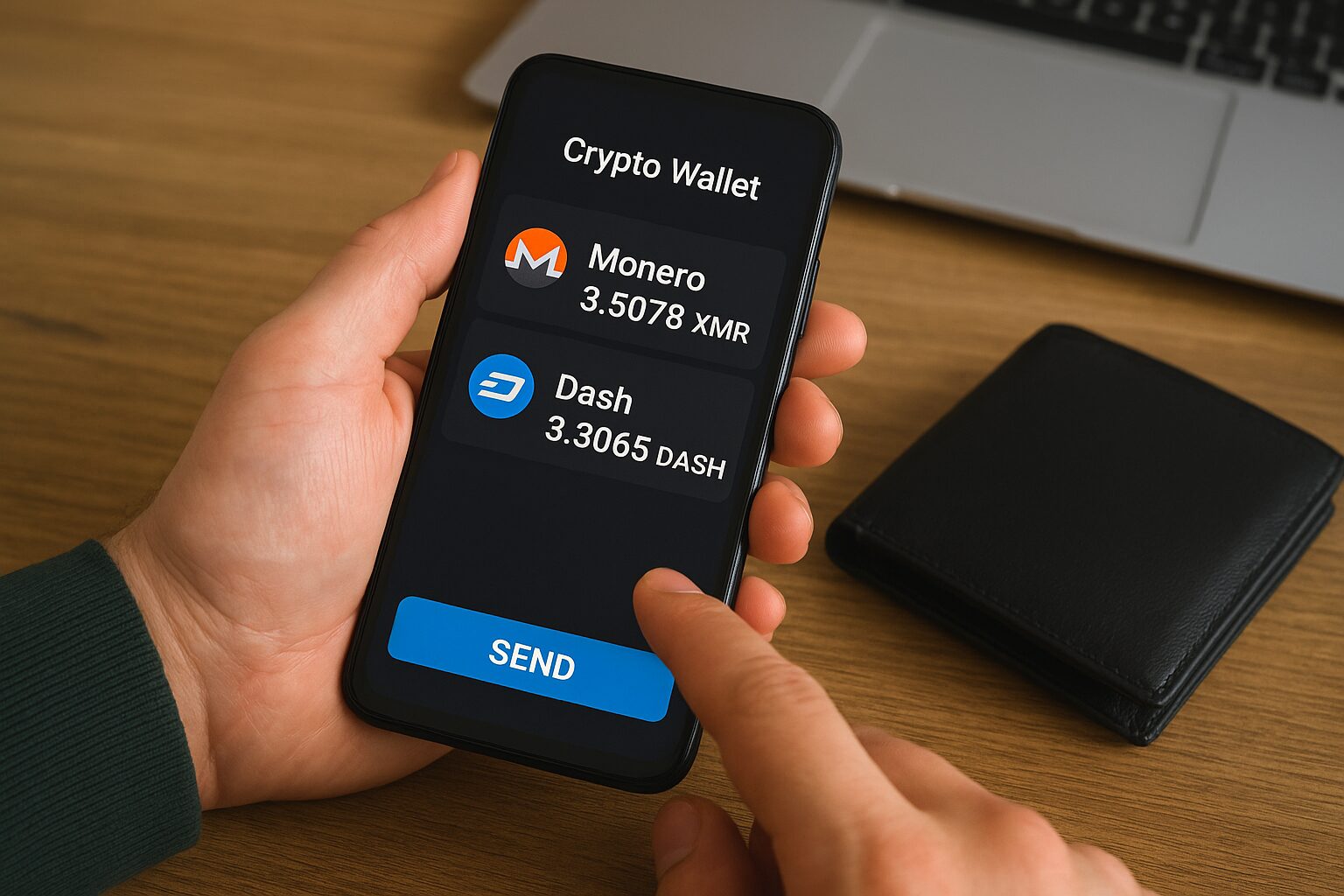
In 2025, privacy coins continue to gain popularity as more people value financial privacy and anonymity in crypto trading. Unlike regular cryptocurrencies such as Bitcoin or Ethereum, privacy coins like Monero (XMR) and Dash (DASH) are designed to hide transaction details — making it difficult for anyone to trace your wallet activity or identity. Choosing the Best Wallets for Trading Privacy Coins ensures your transactions remain secure, private, and fully under your control.
However, trading privacy coins safely depends heavily on the type of wallet you use. A good wallet not only secures your assets but also keeps your transactions private. The right one can mean the difference between total anonymity and potential exposure.
In this guide, we’ll explore the best wallets for trading privacy coins in 2025 — from beginner-friendly mobile wallets to advanced hardware options — so you can trade securely and confidently.
What Are Privacy Coins and Why Wallet Choice Matters
Privacy coins are cryptocurrencies that focus on protecting user identity and transaction history. While Bitcoin transactions are recorded on a public blockchain that anyone can view, privacy coins use advanced cryptographic methods to keep your transactions hidden.
For instance:
- Monero (XMR) uses ring signatures and stealth addresses to mix your transactions with others, making them almost impossible to trace.
- Dash (DASH) offers PrivateSend, which blends transactions through multiple layers to ensure your payments stay private.
Because of these technologies, not all crypto wallets can support privacy coins properly. You need a wallet that recognizes and maintains these protocols to keep your data anonymous.
Using the wrong wallet — especially centralized or exchange wallets — could expose your identity or transaction details. Worse, you might lose control over your private keys, which defeats the purpose of privacy coins entirely.
Key Features to Look for in a Privacy Coin Wallet
When choosing a wallet for privacy coins, keep these must-have features in mind:
- Private key control: Make sure you hold the keys. Remember, not your keys, not your coins.
- Strong encryption: The wallet should have advanced encryption and authentication options.
- Privacy protocol compatibility: Ensure it supports Monero’s stealth addresses, Dash’s PrivateSend, or similar systems.
- Open-source code: Transparency helps the crypto community verify security.
- Cross-platform access: Desktop, mobile, and hardware options give flexibility.
- Backup & recovery: Protect yourself against device loss or damage.
- Multi-coin support: Ideal for traders who hold both privacy and standard coins.
Best Wallets for Trading Privacy Coins (2025 Edition)
1. Monero GUI Wallet
The official desktop wallet for Monero is one of the most secure tools for advanced users. It directly connects to the Monero blockchain, giving you complete control and privacy.
Pros: Full privacy, direct node access.
Cons: Heavy software, not beginner-friendly.
2. Cake Wallet (Monero & Bitcoin)
A top pick for mobile users, Cake Wallet supports both Monero and Bitcoin, offering a clean and simple interface. You can also exchange coins directly inside the app, making it convenient for on-the-go trading.
Pros: Mobile-friendly, built-in exchange, open-source.
Cons: Limited advanced features compared to desktop wallets.
3. Dash Core Wallet
The official Dash wallet comes with built-in PrivateSend and InstantSend features, allowing fast and anonymous transactions. It’s great for traders who want full control over their Dash holdings.
Pros: Excellent privacy, native Dash support.
Cons: Only supports Dash, not other privacy coins.
4. Exodus Wallet
Exodus is a sleek, multi-coin wallet that supports hundreds of assets, including privacy coins like Dash and Zcash. While Monero isn’t directly supported, its easy interface and built-in exchange make it a solid choice for mixed portfolios.
Pros: Easy to use, visually appealing, built-in trading.
Cons: Limited privacy settings compared to Monero wallets.
5. Trezor Model T & Ledger Nano X (Hardware Wallets)
If you’re serious about long-term storage, hardware wallets are your best bet.
- Ledger Nano X supports several privacy coins (including Dash and Zcash).
- Trezor Model T provides unmatched cold storage protection and integrates with wallets like Feather or Exodus for more privacy features.
Pros: Maximum security, ideal for holding large amounts.
Cons: Requires setup; Monero support is limited.
6. Feather Wallet (for Monero)
A lightweight and open-source wallet built for Monero users who prefer simplicity and speed. It offers strong privacy while using fewer system resources than the Monero GUI Wallet.
Pros: Fast, simple, privacy-first.
Cons: Focused only on Monero.
7. Guarda Wallet
Guarda is a versatile multi-platform wallet that supports Monero, Dash, and other coins. It allows staking, in-app swaps, and has a strong reputation for security.
Pros: Web, mobile, and desktop versions; strong privacy support.
Cons: Some advanced features require paid versions.
Comparison Table: Best Wallets for Privacy Coin Trading
| Wallet Name | Supported Coins | Type | Privacy Features | Ideal For | Ease of Use |
|---|---|---|---|---|---|
| Monero GUI | XMR | Desktop | Ring Signatures | Advanced users | Moderate |
| Cake Wallet | XMR, BTC | Mobile | Built-in exchange | Beginners | Easy |
| Dash Core | DASH | Desktop | PrivateSend | Traders | Moderate |
| Exodus | DASH, ZEC | Multi-platform | Limited privacy | Casual users | Very easy |
| Ledger Nano X | Multiple | Hardware | Cold storage | Long-term holders | Moderate |
Best Wallet Pros and Cons
Picking the right wallet is important for safety and ease of use when dealing privacy coins like Dash (DASH) and Monero (XMR). Because they store secret keys offline, hardware wallets like Ledger and Trezor are very safe. Hackers and malware can’t get into them. They also work with more than one cryptocurrency, but they can be pricey, less handy for regular transactions, and harder for beginners to set up. Software wallets, like Dash Wallet or Exodus, the official wallet for Monero, are easy to set up, offer free or cheap access, and let you make transactions quickly. This makes them perfect for people who are just starting out. They are more likely to be hacked, though, because they are connected to the internet.
Their safety relies on how safe the device being used is. Mobile wallets, such as Dash Wallet Mobile or Monerujo for Monero, make it easy to make transactions while you’re on the go and often work with exchanges without any problems. However, they can be lost, stolen, or infected with malware if the phone is hacked, and they don’t have as many advanced security features as hardware wallets. When dealing privacy coins, users can choose the best wallet for them based on privacy, security, and ease of use by knowing the pros and cons of each type.
Security Tips for Trading Privacy Coins
Because privacy coins are private and could be regulated, traders need to be extra careful when they use them. It is important to only use trusted exchanges or wallets that accept the coin and offer strong security features such as two-factor authentication. Keep your recovery phrases and secret keys safe and never give them to anyone else. Because transactions can’t be undone, be wary of fake attempts, scam sites, and links that seem sketchy. Also, think about separating big deals to lower your risk, and always know the rules in your area to make sure your trading stays legal while protecting your privacy.
How to Choose the Right Wallet for You
The best wallet depends on your personal goals and trading habits:
- Frequent traders: Use mobile or web wallets like Cake or Guarda for quick access.
- Long-term holders: Opt for hardware wallets like Ledger or Trezor.
- Privacy purists: Go for Monero GUI or Feather Wallet for total control.
Factors to Look For in the Best Privacy Coin Wallet
A few important things can help you choose the safest and most convenient wallet for privacy coins like Monero or Dash. First, check to see if the wallet gives you full control over your secret keys. This is important to make sure you stay in control of your money and protect your privacy. If you want to keep your money safe from hackers, you need strong security features like two-factor login, encryption, and offline storage (for hardware wallets).
It’s also important that the wallet works with the private features of the coin, such as PrivateSend for Dash or stealth addresses for Monero. For beginners, it’s especially important that the software is reliable and easy to use. Regular updates and active developer help to fix bugs or security holes are also important. Lastly, think about backup and recovery options to make sure you can get your money back if you lose or damage your gadget. Users can choose a wallet that combines privacy, security, and ease of use by looking at these things.
Future of Privacy Coin Wallets
As privacy becomes a global concern, new technologies are shaping how we manage private crypto assets. Expect to see innovations like:
- Zero-knowledge proofs (ZKPs): Enhancing private transactions without revealing data.
- Atomic swaps: Allowing direct exchanges between privacy coins without intermediaries.
- Regulation-resistant wallets: Decentralized apps that can’t be easily censored or banned.
Despite increasing regulations, privacy wallets continue to evolve — blending security, compliance, and anonymity in new ways.
Conclusion
Picking the correct wallet is very important if you want to keep your money safe and remain anonymous when dealing privacy coins like Dash (DASH) and Monero (XMR). Hardware wallets like Ledger and Trezor offer strong security, while software wallets like Exodus and Monero’s main wallet are easy to use and have strong privacy features. Wallets that let you keep your private keys safe and support the coin’s privacy features should always be your first choice. Users can get the most out of privacy coins while minimizing risks and maintaining control of their digital assets by using the right wallets and dealing in a safe way.
FAQs
1. What is the most secure wallet for Monero trading?
Hardware wallets like Ledger Nano X combined with the Monero GUI Wallet provide the highest security.
2. Can I trade privacy coins anonymously using mobile wallets?
Yes, wallets like Cake Wallet or Guarda let you trade privately without revealing your identity.
3. Are hardware wallets compatible with all privacy coins?
Not all, but most support Dash and Zcash. Monero requires compatible apps or integrations.
4. What’s the difference between a privacy wallet and a regular crypto wallet?
Privacy wallets use encryption and masking to hide transactions, while regular wallets show them publicly.
5. How can I ensure my wallet transactions remain untraceable?
Use wallets that support ring signatures or PrivateSend, and always connect through a VPN or Tor.
6. Do exchange wallets protect my privacy coins?
No. Exchanges usually store your private keys, which compromises privacy and control.
7. Which wallet supports both Monero and Dash?
Guarda Wallet supports both XMR and DASH, making it great for multi-coin traders.
8. Is it safe to store large amounts of privacy coins in mobile wallets?
Not recommended. Use hardware wallets for storing large sums.
9. How often should I back up my wallet?
Every time you make major changes or add new accounts. Store backups securely offline.
10. Can I recover my privacy coins if I lose my device?
Yes, as long as you have your seed phrase backed up securely.
Disclaimer
This article is for informational purposes only and should not be considered financial advice. Always do your own research before investing or trading cryptocurrencies. The wallets mentioned are based on public information available as of 2025.

Your point of view caught my eye and was very interesting. Thanks. I have a question for you.