

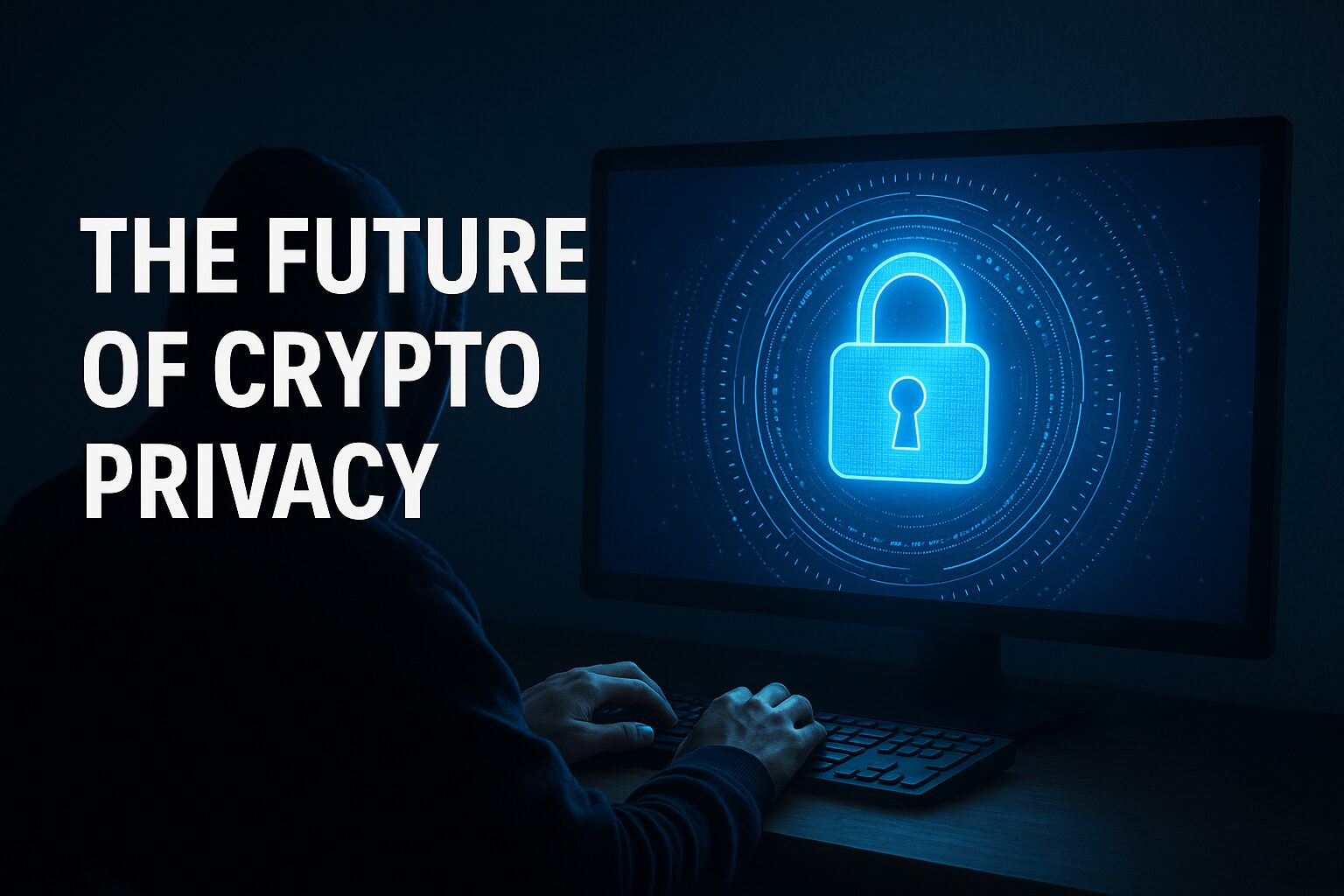
Crypto privacy has come a long way. In the early days of Bitcoin, many believed it was fully anonymous. But as blockchain analysis tools grew smarter, people realized that public blockchains are far from private. Every transaction can be traced. Every wallet can be tracked. And in a world where data is the new gold, privacy has become a powerful need, not just a preference. This shift is why The Future of Crypto Privacy has become one of the most important conversations in today’s digital world.
Today, the conversation around digital secrecy is rising again. Governments are tightening surveillance. Companies collect more user data than ever. And blockchain users want private transactions, stronger crypto confidentiality, and complete data protection.
This leads us to the big question:
Will anonymous coins dominate the crypto market in 2026?
Let’s dive deep into how privacy is evolving and where the future may lead.
Understanding Crypto Privacy in 2025
In a blockchain ecosystem, privacy simply means hiding financial details—such as wallet addresses, transaction amounts, and user identity. Traditional blockchains like Bitcoin and Ethereum keep your identity hidden, but all your transactions are fully visible. Anyone can track the flow of your money.
Why Transparent Blockchains Are a Problem
- Wallets can be linked to real names through exchanges.
- Companies track on-chain behavior to build profiles.
- Governments use blockchain analytics to monitor flows.
As surveillance intensifies, users want safer ways to transact. Privacy is no longer just for “shady” users—it’s for:
- everyday people protecting financial data
- businesses keeping supply chains secure
- traders who want confidentiality
- activists and journalists
Is Crypto the Future of Privacy?
Crypto has the ability to be very important for privacy in the future, especially as worries about tracking data and bank records grow. Blockchain technology lets people send money to each other without depending on big organizations that store and collect personal information. Cryptocurrencies that care about privacy go even further by using advanced cryptography to keep user identities and transaction information safe. But getting a lot of people to use it will rest on finding a balance between privacy rights, following the rules, and safety. Crypto may not be the only answer, but it will likely stay a powerful way to protect financial privacy in a world that is becoming more and more digital.
Navigating the Future of Privacy in Crypto
As the world of cryptocurrencies changes, finding the right balance between new technologies and following the rules is important for safety in the future. Users can protect their identities and activities with privacy-focused coins and tools, but users must stay up to date on what the law says in their own countries because regulators are paying more attention to them. Improvements in cryptography and blockchain privacy solutions may make these technologies safer and easier to use. Adopting these technologies responsibly can also help make them more acceptable.
People and businesses can easily navigate the complicated world of privacy, security, and compliance in the crypto world by staying informed, using safe wallets and exchanges, and adhering to best practices.
Anonymous Coins: How They Actually Work
Privacy coins were created to solve transparency problems. They use cryptography to hide transaction details so outsiders cannot track who sent what.
Popular Privacy Coins
- Monero (XMR) – the leader in privacy
- Zcash (ZEC) – uses zk-SNARKs for selective disclosure
- Firo (FIRO) – uses Lelantus for high-level anonymity
- Haven (XHV) – offshore-style private stable assets
Core Technologies Behind Privacy Coins
- Stealth Addresses
A one-time address for every transaction, hiding the receiver. - Ring Signatures & RingCT
Mixes your transaction with others so no one knows which is yours. - zk-SNARKs / Zero-Knowledge Proofs
Proves a transaction is valid without revealing any details. - Dandelion++
Hides where a transaction came from in the network.
All combined, these tools offer full-stack anonymity that transparent blockchains cannot match.
Market Trends Shaping the Future of Crypto Privacy
Interest in crypto privacy surged in 2024–2025 as digital tracking increased worldwide. Several major trends indicate where the market may be going.
Growing User Demand
More people rely on privacy networks due to:
- rising surveillance laws
- exchange data leaks
- growing financial censorship
- business confidentiality needs
Institutional Sentiment
Even institutions are exploring privacy coins for:
- confidential settlements
- private B2B payments
- secure multi-chain interactions
Geopolitical Influence
Countries under sanctions or political pressure see rising use of privacy assets. Whenever global tensions rise, anonymous crypto adoption increases.
Regulatory Battles on the Horizon
Privacy coins face strong resistance from regulators.
Major Sources of Pressure
- FATF (Financial Action Task Force)
- AML (Anti-Money Laundering) rules
- KYC requirements
- Exchange delistings
Governments fear losing visibility into financial movements. But privacy developers argue that financial freedom should remain intact.
2026: Possible Scenarios
- Strict bans and exchange delistings
- Regulated privacy with compliance tools
- Grey-area legality similar to VPN usage
- Full acceptance as privacy becomes a global right
The biggest question is whether technology will outrun regulation—or the other way around.
Will Anonymous Coins Dominate 2026? Predictions & Scenarios
Here are the realistic possibilities for 2026:
Scenario 1: Privacy Coins Surge
Users shift away from public chains, and privacy coins outperform major assets due to:
- growing digital surveillance
- tighter centralized exchange tracking
- greater privacy awareness
Scenario 2: Hybrid Privacy Layers Rise
Instead of pure privacy coins, users rely on:
- ZK-rollups
- privacy layers
- mixers and shields
- sidechains with opt-in secrecy
This keeps privacy coins strong but not dominant.
Scenario 3: Regulatory Tightening Cripples Adoption
Heavy bans limit liquidity and access. Privacy coins remain niche.
What Will Decide the Winner?
- regulation speed
- technological breakthroughs
- liquidity
- user adoption
- global stability
Innovations Pushing Privacy Forward
Privacy tech continues evolving fast.
New Developments
- advanced zk-proof systems
- FHE (Fully Homomorphic Encryption) pilots
- privacy-focused L2s
- private cross-chain bridges
AI and Counter-Privacy Tools
AI is improving blockchain analysis—forcing privacy developers to innovate faster than ever.
Layer-2 Privacy Upgrades
Major chains like Ethereum and Solana are exploring privacy-enhanced L2 shields.
Semantic Keywords: next-gen privacy tech, blockchain innovation, encrypted finance.
Privacy Coins vs. Privacy Layers: Who Wins?
Privacy Coins
Pros:
- strongest anonymity
- mature cryptography
- independent from main chains
Cons:
- regulatory pressure
- lower liquidity
Privacy Layers / Mixers
Pros:
- easier adoption
- integrates with popular chains
- scalable
Cons:
- weaker privacy
- mixer bans
- vulnerable to analytics tools
Who Will Users Choose?
- Average users → layers for convenience
- Privacy-max users → privacy coins
- Businesses → selective disclosure tools
- Traders → whichever offers better liquidity
Risks and Challenges in 2026
Even in 2026, there are still a lot of risks and problems that come with using privacy coins and cryptocurrencies. Governments around the world are trying to make compliance rules tighter, which could affect exchanges, wallets, and the ease of accessing transactions. Users also face security risks, such as phishing, malware, and losing their secret keys, which can mean they lose their money forever. Also, privacy coins are still being used for illegal things, which is making law enforcement pay more attention to them. There are also still problems with technology, like making it scalable and integrating it with mainframe banking systems. To deal with these risks, users need to make safe practices a priority, keep up with changes in the law, and carefully consider the platforms and tools they use.
Should You Invest in Privacy Coins? A Balanced View
There are some great things about investing in privacy coins like Monero (XMR) or Dash (DASH), but there are also some big risks. These coins have strong privacy, security, and fungibility features that may appeal to people who want to stay anonymous or avoid being watched. But they are a riskier bet because they are closely watched by regulators, not as widely used as mainstream cryptocurrencies, and could have legal consequences. When you have a fair view, you think about both the pros and cons of something before you spend money on it.
Who Could Do Well?
Someone or a group that values privacy will benefit most from privacy coins. This includes people who care about their privacy, companies that deal with private financial matters, and people who send money across borders and are worried about being watched or censored. Privacy coins may be a good addition to the digital portfolios of investors who are okay with regulatory risks and using safe platforms.
Thoughts on the Portfolio
Adding privacy coins to a portfolio should be done with a sense of risk and variety in mind. Due to regulatory uncertainty and possible liquidity limits, they should usually only be a small part of a larger crypto plan. Investors should think about combining privacy coins with stablecoins and more well-known cryptocurrencies like Bitcoin or Ethereum to control volatility and keep their risk profile fair.
Short-Term vs. Long-Term
Long-term investors may be able to make money with privacy coins as privacy worries rise and blockchain technology changes, but they need to be patient and aware of how regulations are changing. On the other hand, short-term buyers need to be aware of how volatile the market is, how liquid the exchange is, and the difficulties of doing business in a very private setting. Whether you’re hanging on to something for a long time or trading it for a short time, you need to carefully plan and use strong security practices to lower your risks.
Conclusion: The Future of Crypto Privacy in a Volatile World
Crypto privacy is entering a new era. As digital surveillance grows and global tensions rise, more users will seek secure and confidential ways to move money.
Will anonymous coins dominate 2026?
They could, but only if regulation doesn’t restrict them. Even if privacy coins don’t dominate, privacy itself will. Whether through native coins or privacy layers, the future of crypto is moving toward encrypted finance.
Privacy is not a crime—it is a human right. And in the next era of DeFi, it may become the most valuable feature of all.
FAQs
- Are privacy coins illegal?
No, but some countries restrict them due to AML concerns. - Which privacy coin is the safest?
Monero is considered the strongest due to its mature technology. - Can regulators stop privacy coins?
They can limit access but cannot kill decentralized networks fully. - Are anonymous coins used only for crime?
No. Most users simply want financial privacy and data protection. - Is it possible to trace Monero?
Currently, Monero’s privacy system makes tracing extremely difficult. - Will centralized exchanges delist privacy coins?
Some already have, but decentralized exchanges keep them alive. - Are privacy layers safer than mixers?
Yes, privacy layers are more secure and harder to ban. - Is investing in privacy coins risky?
Yes—due to regulation and liquidity issues. - Will privacy coins grow in value by 2026?
Many analysts expect steady growth as demand increases. - Are privacy tools legal for everyday users?
In most countries, yes, as long as they are not used for illegal activity.
Disclaimer
This article is for educational purposes only and does not provide financial, investment, or legal advice. Always do your own research and consult a licensed professional before making financial decisions.

If you love a good challenge and thrilling gameplay, this is for you! The variety of obstacles and the constant threat of natural disasters make natural disaster survival obby an incredibly engaging experience. It’s perfect for players seeking intense action and quick reflexes. Definitely worth checking out!