

Non-fungible tokens (NFTs) have changed how we see digital ownership. By 2025, NFTs will be even more important. They cover a wide range of digital items, like art and collectibles.
The NFT market is booming, with its value soaring. NFTs are digital assets kept on a blockchain. They offer a safe and clear way to own and trade unique digital items.
Key Takeaways
- NFTs represent unique digital assets stored on a blockchain.
- The NFT market has experienced significant growth in recent years.
- In 2025, NFTs continue to expand their presence in the digital world.
- NFTs provide a new way to buy, sell, and own digital content.
- The use of blockchain technology ensures secure and transparent NFT transactions.
How do NFTs work?
Non-Fungible Tokens (NFTs) use blockchain technology to make digital assets that are unique and can be checked. Each NFT is a unique token that is recorded on a blockchain, most often Ethereum. This makes sure that the tokens are owned by the right people and are real. When someone mints an NFT, information about the asset, like who created it, when it was created, and a link to a digital file, is stored forever on the blockchain.
There is a public record that keeps track of who owns an NFT, so anyone can check who owns it and see its transaction history. Because NFTs are non-fungible, each token has its own value and can’t be traded for another token like cryptocurrency. They are bought, sold, and traded on specialized markets.
These days, NFTs can stand for digital art, songs, videos, in-game items, virtual land, or even access rights. Smart contracts can also add features, like paying creators royalties automatically whenever the NFT is sold again. This gives NFTs value that goes beyond just ownership, as they can be collected and used.
How do you buy NFTs?
Buying NFTs involves a few key steps, usually through a blockchain-based marketplace:
- Set up a crypto wallet – Choose a wallet like MetaMask, Coinbase Wallet, or Trust Wallet that supports NFTs and connects to marketplaces.
- Fund your wallet – Most NFTs are purchased using Ethereum (ETH), though some platforms accept other cryptocurrencies. You’ll need to buy ETH on an exchange and transfer it to your wallet.
- Choose an NFT marketplace – Popular marketplaces include OpenSea, Rarible, Magic Eden, and Binance NFT. Browse collections, view prices, and check creator credibility.
- Connect your wallet – Link your crypto wallet to the marketplace to enable transactions.
- Purchase the NFT – You can buy at a listed price, place a bid in an auction, or participate in drops. Confirm the transaction through your wallet, paying any gas fees required for blockchain processing.
- Store and manage your NFT – After purchase, your NFT is stored in your wallet. You can hold it, resell it, or use it in supported games, platforms, or metaverse environments.
Always research the project, verify authenticity, and understand marketplace fees before buying to minimize risk.
The State of NFTs in 2025: Market Overview
The NFT market is maturing in 2025, moving from collectibles that were bought because of the hype to assets that are used and offer benefits like access or control. Even though trade volumes have been all over the place, mainstream brands and creators are becoming more interested, and the market is slowly starting to recover. Even though NFTs are volatile and customer interest in them changes over time, they are becoming more and more seen as long-lasting digital assets that are driven by use cases. This is a shift away from short-term speculation and toward long-term adoption.
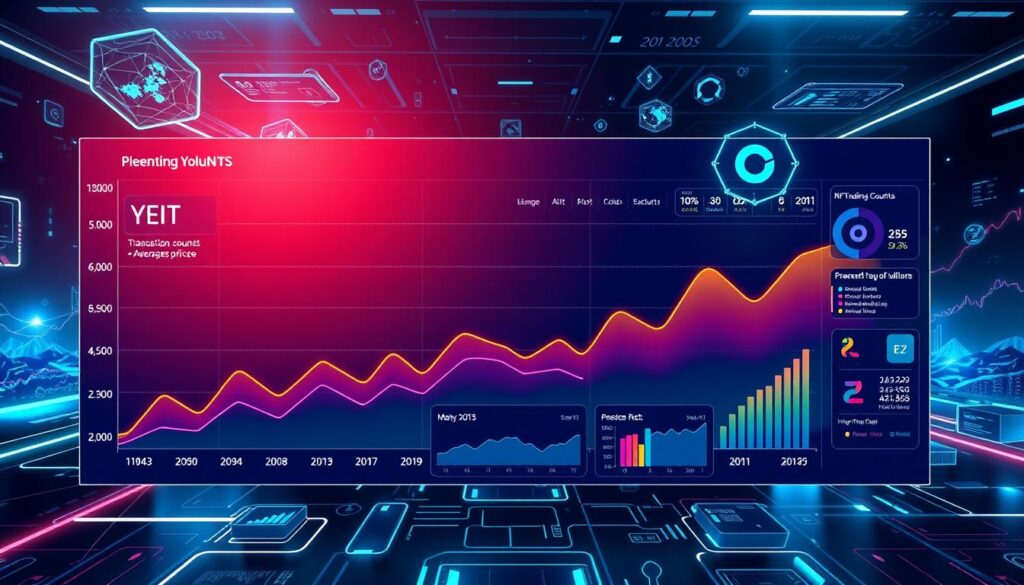
Visual Data: NFT Market Capitalization Graph 2021-2025
The graph below shows how the NFT market capitalization has grown from 2021 to 2025.
The data shows the NFT market is always changing, growing, and attracting more people. It will be exciting to see how it keeps evolving in the future.
What Is an NFT? Understanding the Technology in Today’s Context
An NFT, or Non-Fungible Token, is a one-of-a-kind digital asset that is saved on a blockchain and proves ownership or authenticity of a digital item. While cryptocurrencies like Bitcoin and Ethereum can be traded and swapped for other cryptocurrencies, each NFT is unique and can’t be directly traded for another NFT. Today, NFTs are used for a lot of different things, like digital art, collectibles, music, videos, in-game items, and virtual real estate. They let producers make money off of their work and give buyers proof that they own it.
Blockchain technology makes sure that everything is open, safe, and authentic. It is easy to see when an NFT was created and when it was transferred. In addition to collectibles, NFTs are being used more and more in gaming, DeFi, and the metaverse to provide useful features like access rights, rewards, or participation in government. This shows that the technology has grown from being a novelty to having useful uses in today’s digital world.
The NFT world is changing fast in 2025. We’re seeing big changes in how companies use NFTs and new rules for them.
Major Corporate Adoptions and Partnerships Announced in 2025
This year, big companies are really getting into NFTs. Tech giants and NFT platforms are teaming up. For example, a big online store teamed up with an NFT site to sell cool digital items. This is helping them reach more customers.
Key Highlights:
- Big brands are using NFTs to keep customers coming back.
- Artists and brands are making special digital items together.
- NFT sites are working with online stores for easier buying.
Statistical Analysis: NFT Trading Volumes Across Different Sectors
NFT trading is up a lot in 2025. Art is still the biggest, but collectibles and games are catching up.
More people are interested in NFTs for things like virtual land and game items.
Regulatory Landscape: New Legislation Affecting NFTs
Lawmakers are making rules for NFTs. They want to make it clear how NFTs are taxed and protect buyers. These rules will change how NFT sites work and how people buy and sell.
Key Regulatory Changes:
- Rules for taxing NFTs.
- New laws to protect buyers.
- Tighter rules for NFT sites to fight fraud.
Environmental Impact: Latest Sustainability Metrics and Solutions
NFTs have been bad for the planet, but things are getting better. New tech is making NFTs more eco-friendly.
Here are some good changes:
| Metric | 2024 | 2025 |
|---|---|---|
| Carbon Footprint | 1000 tons CO2 | 600 tons CO2 |
| Energy Consumption | 500 MWh | 300 MWh |
The push for green NFTs is growing. New tech is making it happen.
Emerging Applications Transforming Industries
The world of NFTs is changing fast. New uses are popping up in many industries. NFTs are moving beyond art into exciting new areas.
Metaverse Integration: Usage Statistics and Growth Projections
NFTs are becoming a big part of the metaverse. Recent numbers show a 300% jump in NFT deals in metaverse spaces last year.
Experts predict the metaverse will drive NFT use even more. By 2026, half of all NFT deals might happen in the metaverse.
Decentralized Finance (DeFi) and NFT Collateralization
NFTs are now used as collateral in DeFi. This is because more people see NFTs as valuable digital assets. NFT collateral use has doubled in a year, with more DeFi platforms using NFTs.
“The use of NFTs as collateral is revolutionizing the DeFi space, enabling new financial products and services.” – Industry Expert
Enterprise Solutions: B2B Applications of NFT Technology
Big companies are looking into NFT tech for their work. NFT solutions are being used in supply chains and digital ID checks. Over 30% of Fortune 500 companies are checking out NFT solutions.
Data Visualization: Sector-by-Sector NFT Adoption Rates
Different sectors are adopting NFTs at different rates. Here’s a look at how each sector is doing:
| Sector | Adoption Rate (%) |
|---|---|
| Art | 40 |
| Metaverse | 30 |
| DeFi | 20 |
| Enterprise | 10 |
The table shows NFTs are used in many fields, with art leading. As NFTs grow, we’ll see more use in other areas too.
Conclusion: The Future Trajectory of NFTs Beyond 2025
The future of NFTs is bright, with more growth and use expected after 2025. New uses and applications are coming, changing many industries.
Statistics and graphs show the NFT market’s trends and projections. The future of NFTs will be shaped by better blockchain tech, more companies using them, and clear rules.
The NFT world is getting better, changing how we make, own, and trade digital things. With the metaverse and DeFi getting more popular, NFTs are set for big growth and new ideas.
Thank you for your sharing. I am worried that I lack creative ideas. It is your article that makes me full of hope. Thank you. But, I have a question, can you help me? https://www.binance.com/es/register?ref=RQUR4BEO